
Showing posts with label posted by Jessica. Show all posts
Showing posts with label posted by Jessica. Show all posts
Tuesday, December 17, 2013
There once was a paper...
So, here is the finished product of my paper: Ta-Da! I had a wonderfully positive experience researching and writing it. I think the most fun I had was through networking. Figuring out that there were people on the other side of the country (or planet as the case may be) who were not only interested in what I was interested in, but also interested in how my ideas developed.

Monday, December 2, 2013
My Abstract: Re-Orienting Milton
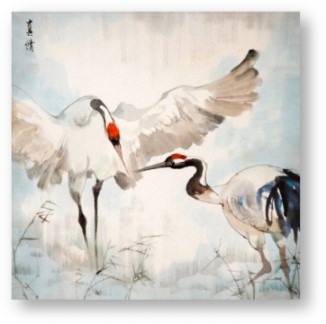
So I found this Conference in Tokyo talking about East-West, cross-cultural ties in literature and art looking for papers due last week. Sooo... I sent in an abstract. Professor Burton and lots of family and friends helped a ton with the polishing, but here's the final product:
An oriental reading of Paradise
Lost and other writings resolves certain longstanding
paradoxes in Milton's great works and reorients readers to his initial and
intended meaning. Such paradoxes have come about due to gradual changes in our
own culture resulting in an ultimate disconnect from the original culture and
paradigm of Milton's time and place. A specific cross-culture norm that existed
in both the Far East and in the West at the time Milton was writing was a value
placed on what Western culture now condemns and terms the "passive."
After WWII, our culture shifted out of this value system while China remained
the same, making our reading of Paradise Lost and other
Miltonic works imperfect and biased.
By valuing the passive in the
same way as Eastern culture while reading Milton's great works, we
not only eliminate some of the false assumptions on which the West's
Anglocentric view has founded arguments about Milton's culture but also recover
the intended meaning of his work. One such assumption is that heroism is
parallel with action. This assumption is the foundation of the all too common
Romanticizing of Satan in Paradise
Lost. As Satan is the most active, ambitious character in Milton's work,
many critics have made the mistake of setting him as a Romantic hero; however,
acknowledging the centrality of passivity in Milton's work (and perhaps in the
Christian message itself) undermines the romanticizing of Satan as a character.
In other words, by Romanticizing Paradise Lost (or aligning it with the foreign and
exotic), this de-Romanticizes Satan.
Keywords: Paradise
Lost, Orientalism, Romanticism
Monday, November 25, 2013
Chinese & European Takeaways: An Annotated Bibliography
My working thesis that is more of an abstract and a little redundant... Help anyone?
Postcolonial reading has come under recent criticism as modern innovations have made other cultures more accessible and comparable to our own. Robert Markley has been one of its main critics. Markley's main argument in his second chapter of The Far East and the English Imagination, 1600-1730 is that postcolonial criticism of 17th century authors like Milton has been too narrow and has made assumptions about things that are not factual. Namely, it has taken for granted the "fact" that England has not only been the supreme historic power, but also that the English have all historically viewed themselves in this way. He debunks this assumption first by naming statistics supporting China as a more civilized nation at the time English colonization and second by citing Englishmen at the time who lobbied in Parliament to emulate China's model of government. He claims it is our Anglocentricity that prevents our acknowledging either the influence of these other powers or the threat the English felt at Asia's political and religious power. In other words, Markley believes postcolonial reading and our Anglocentricity assumes the difference between England and China is in favor of England while the truth was the complete opposite. I would like to state that it is Markley's own Anglocentricity that prevents his ability to acknowledge the similarities between Milton's work and Far Eastern culture. It is these similarities that reconcile long-debated contradictions throughout pieces like Paradise Lost.
Universal similarities change with circumstance and time. One universalistic norm that existed at the time Milton was writing was a value placed on what our culture now condemns and terms the "passive." After WWII, our culture changed while China remained the same in this regard, making our Anglocentric reading of Paradise Lost imperfect and biased. By reading Milton in Eastern thought, or valuing the passive, we eliminate some of the things our modern, Anglocentric view mistakenly assumes about Milton's culture. By using this reading, we find new insight into the definition of power studied by the postcolonial critics Markley criticizes.
Here's a list of sources I've found useful (or want to soon utilize):
 |
| Taken by Nicole Harvey using Canon Powershot S110 on 11/9/2012 |
Universal similarities change with circumstance and time. One universalistic norm that existed at the time Milton was writing was a value placed on what our culture now condemns and terms the "passive." After WWII, our culture changed while China remained the same in this regard, making our Anglocentric reading of Paradise Lost imperfect and biased. By reading Milton in Eastern thought, or valuing the passive, we eliminate some of the things our modern, Anglocentric view mistakenly assumes about Milton's culture. By using this reading, we find new insight into the definition of power studied by the postcolonial critics Markley criticizes.
Here's a list of sources I've found useful (or want to soon utilize):
Wednesday, November 20, 2013
Seeing Through the Mist of Eurocentricity: Oriental Influence in Paradise Lost
My working thesis is this:
Our projection of Eurocentricity and Americentricity onto Milton's culture has caused us to have the mistaken impression that Milton was more at odds with oriental ideals than he actually was. Even in Markley's critique of Milton's Eurocentricity, he is himself Eurocentric.Following are some of my claims:
There are pieces of 17th century England (or at least Miltonian ideals) that shared viewpoints with 17th century, ancient, and current Chinese culture. (God and the Son's "passivity," Satan's "activity," there are many ways to say/see one thing, putting the most important thing at the end of the sentence, masculine emulation of our current "feminine.")
Postcolonialism England is blind to its negative influence as a power. Eurocentric England is blind to other powers' positive influences. (Delft and Gardens all came from China.)
Milton was against Jesuits preaching because of his non-Jesuit sentimentalities, not fear of pagan/Chinese assimilation.
Milton had no qualms using pagan doctrine to prove Christian points. It seems very unlikely he would be unsettled by Christian "assimilation," especially after his idealism of China in referring to Christ's second coming in Book XI referring to China as "the seat,/ Of mightiest empire, from the destined walls/ Of Cambalu" (XI 386-388).
Monday, November 18, 2013
Chinese Citizen Milton
Although I was skeptical at first, I was unable to shake some of the connections between modern Chinese culture and ideas persistent in Paradise Lost and Paradise Regained. Some of the similarities include his ideas about knowledge, heroism, power, and gender roles. Many of these topics seem contradictory when reading it from a modern American culture perspective. For example, the fact that Satan is so active and Christ is so passive seems at odds with our ideas of power. Milton has fallen under much gender role criticism because Eve seems inferior by our American standards, but after a little study I've found a few interesting things:
Wednesday, November 13, 2013
The Power of the Feminine and the Power of the Moon: Eastern Thought in Eden
.jpg) We've talked about the idea of passivity being the superior trait to dominance. This is a hard concept for our minds to grasp and is at the center of many gender debates right now. Passivity often characterized as a very feminine characteristics and is much less desirable than dominance. However, it seems like all the glorified characters in Paradise Lost and Paradise Regained are as dominant as they are evil. They dominate the books in regards to time and initiation of events. Satan is active. He makes stuff happen! He fights against God, he traverses Chaos. On the other hand, God and Christ are both very reactive and seem to have very little screen time. The GREATEST STORY OF ALL is Christ's reaction to Satan.
We've talked about the idea of passivity being the superior trait to dominance. This is a hard concept for our minds to grasp and is at the center of many gender debates right now. Passivity often characterized as a very feminine characteristics and is much less desirable than dominance. However, it seems like all the glorified characters in Paradise Lost and Paradise Regained are as dominant as they are evil. They dominate the books in regards to time and initiation of events. Satan is active. He makes stuff happen! He fights against God, he traverses Chaos. On the other hand, God and Christ are both very reactive and seem to have very little screen time. The GREATEST STORY OF ALL is Christ's reaction to Satan.One thing that our culture does to throw a wrench in the works or make this seem contradictory is relate greatness to dominance. If, however, we read using the Eastern theories of power, things are easily reconcilable. Take, for example, some popular quotes from Taoist literature:
“The hard and mighty lie beneath the ground
While the tender and weak dance on the breeze above.”
― Lao Tzu
“The moon does not fight. It attacks no one. It does not worry. It does not try to crush others. It keeps to its course, but by its very nature, it gently influences. What other body could pull an entire ocean from shore to shore? The moon is faithful to its nature and its power is never diminished.”Probably the most interesting reading I did this week was from the book The Chinese National Character: From Nationhood to Individuality. In it is addressed the idea that since WWII, American men have fought hard against the idea of relativism and passivity because they defined it as feminine. "In America, the immediate postwar era witnessed a censure of relativism, especially cultural relativism in anthropology, and the rise of a more affirmative attitude toward Western values vis-a-vis the totalitarianism of the Eastern Bloc." Other cultures, including the Chinese culture, do not see it that way. "Our Chinese colleagues objected strenuously whenever the word 'passivity' was used in connection with the Chinese preferences for a life of contemplation." In the eyes of the Chinese, it is the "passive" things (or "feminine" as defined by American ideals) that define success. For example, being well-read and scholarly is often in the form of memorizing poetry and learning languages. Good health is defined by eating light, not necessarily working out. Exercise is walking and badminton not lifting weight. In China, these are ideas of power. Perhaps reading Milton as a modern American inhibits our view of him and the real view of power. Power is less like dominion and more like vulnerability. It is the power to feel, the power to influence. It is the power of the feminine and the power of the moon.
― Deng Ming-Dao, Everyday Tao: Living with Balance and Harmony
Monday, November 11, 2013
{ambituity} Absolute Truth is Absolute Ignorance
One major critique of Milton's Paradise Lost and Paradise Regained brings up the seeming contradiction between Milton's advocacy of free speech and circulation of knowledge and Raphael's charge to be "lowly wise" or Christ's assertion that he has come as an "inward oracle / To all truth requisite for men to know" asserting that there is only a certain amount of truth men should know, putting this text under much criticism. This contradiction can be resolved, however, if we look at Paradise Lost and Paradise Regained with the Chinese understanding of knowledge.
In most western societies, we see knowledge and truth as something absolute finite. Once obtained, it's something to be declared and shared through speech. As illustration, we have idioms like the following:
 In Chinese cultures however, knowledge is extraordinarily relative and ambiguous. Because of that, it is not shared with what you say, but how you live or what you feel. They have idioms such as the following:
In most western societies, we see knowledge and truth as something absolute finite. Once obtained, it's something to be declared and shared through speech. As illustration, we have idioms like the following:
- know the ropes
- can't make heads or tails of it
- under one's belt
- know something backwards and forwards
- 口說無憑 Words can't be taken as evidence.
- 信口開河 If you believe in words, you open a river of destruction.
- 心直口快 If your heart is straight, your mouth will be fast (or you will say what you have to in few words).
- 知足常樂 To know is enough to make one happy.
- 不知所措 The root of all mistakes is not knowing.
Or perhaps the most fascinating one with the story attached:
Tuesday, November 5, 2013
Samson the Tragedy
We also talked about how difficult it would be to Samson Agonistes into an actual stage production and then, even if it was, that Samson seems bit too whiny to sympathize with. I would like to submit that perhaps the performance of the play would not only be natural, but would enhance the audience's view of Samson. For three reasons
1. Samson, the Bible hero, fits the bill for Greek tragic hero. One critic said "Samson Agonistes follows a common tragic pattern : the hero, looked on as something monstrous or unacceptable, is killed or exiled, or as in Samson's case, is forced into a position where death is inevitable. This pattern is also Christian. It is related to Milton's ideal of Christian heroism, of plain heroic magnitude of mind, of the single just man, of patience as the truest fortitude, or of the suffering of the saints."
2. The purpose of Greek tragedy parallels the purpose of Bible stories. Each was to warn against pride and remind the audience that uncontrolled power corrupts. The power given to Samson by God mirrors not only other Greek plays, but also other characters of the Bible like David, Adam, and Judas Iscariot. By seeing their downfall, we are supposed to associate pride, disobedience, and careless rule with anguish.
3.The Chorus was extraordinarily effective in fulfilling this desired Greek purpose and would consequently be effective in relaying the Christian purpose. The way the Chorus functioned was overwhelmingly effective in producing this feeling of anguish which made for very poignant, emotional connections to form very quickly for the audience between the evil actions and painful consequences.
Friday, November 1, 2013
Across Chaos to the Savage Deserts of America: A Postcolonial Study of Milton
Super fun research! Took most of the time trying to cut it down. I had been talking to my roommate about different methods of criticism and before choosing a topic for the paper, I started browsing. Chinua Achebe's Things Fall Apart is one of my favorite novels and I've always found postcolonial criticism fascinating. Seeing Milton through that lens has been eye opening (in the best sense) to the distinct culture biases we have and their origins. Want to know what Milton thought about Native Americans and how those ideas shaped the world we live in? Click here!

Wednesday, October 30, 2013
Post-Colonial Paradise Lost Pre-write
 |
| The Motherland and her dependent colonial offspring by William-Adolphe Bouguereau |
Although Milton's Of Reformation and Paradise Lost still share many similarities with other works under postcolonial criticism, they ultimately condemn colonialization and predict the eventual dissolution of the English Empire.
Parallels between colonial history and Paradise Lost, Satan and colonizers both:
- Oppose higher power and cause a civil war
- Move across expanse to new, beautiful land
- Encounter beautiful, unintelligent, indigenous people
- Cause the downfall of the indigenous with words
- Return as conqueror
- NEW TWIST (main difference from many other works under postcolonial criticism): Satan (colonizer) is punished
Quotes showing Milton's prediction in Of Reformation:
"In all these things hath the Kingdome been of late sorely weakened, and chiefly by the Prelates. What numbers of faithful and freeborn Englishmen and good Christians have been constrained to forsake their dearest home, their friends, and kindred, whom nothing but the wide Ocean, and the savage deserts of America could hide and shelter from the fury of the Bishops."
Friday, October 25, 2013
The Catalyst of Creation: Surprised by Saintliness

Stanley Fish would argue that as we read Paradise Lost, we feel for the character of Satan and that surprises us. To over-simplify his argument, we, as inherently good creatures, are surprised by what is deemed "other."
In Book VIII and IX of Paradise Lost, Adam and Eve have a similar experience as the reader. There is one specific time in which Adam's curiosity is aroused by the mysteries of God's creations and upon seeking explanation from Raphael is charged to
"Solicit not thy thoughts with matters hid;Adam is charged, not with sin, but with what could become sin. Eve, too, upon having the dream of eating the fruit has not sinned, but the seed of sin has been planted. Both husband and wife are surprised at this troubling event leading us to infer that they are, in fact, pure. Sin and the idea that it is within their capabilities is surprising and therefore "other."
Leave them to God above; him serve, and fear.
. . . Heaven is for thee too high
To know what passes there; be lowly wise:
Think only what concerns thee, and thy being;"
The mysteries of God's creations also illicit surprise from quite another source. Here is Satan's reaction to God's crowning achievement, Eve:
Tuesday, October 22, 2013
Her the Inferior, Yet...
 |
| Yeah Milton, put Satanic Eve in her place. |
And inward faculties, which most excel;
In outward also her resembling less
His image who made both, and less expressing
The character of that dominion given
O'er other creatures:"
Many female critics abhor this section of Paradise Lost where Adam is describing his reaction to Eve. Sandra M. Gilbert, speaking specifically of this attitude in Milton's work expressed,
"for [Woolf], as for most other women writers, both [Milton] and the creatures of his imagination constitute the misogynistic essence of what Gertrude Stein called 'patriarchal poetry.'"While this reaction towards Milton is extraordinarily common among most critics, it is also helpful to realize where Milton is coming from. 64 years before the first publication of Paradise Lost, England mourned the loss of their Protestant, female ruler. The social and ideological implications of her rule on the English mind, more specifically on Milton's, raise so many questions. For example, did Milton view women as fit to rule on their own or did he see Elizabeth as a product of her male counselor? Did he sympathize with Elizabeth as a Protestant or was he a critic of her as a dictator?
Saturday, October 19, 2013
What You See is What You Get
GET: verb \ˈget, ÷ˈgit\ to find out by calculation <get the answer to a problem>
When looking at these pictures is it more important to know what you're seeing or how you see it?

This distinction is a key theme in Milton's "Areopagitica" as well as his beloved Paradise Lost. Milton argues the point that it is the mind or soul that is good or bad, not the environment or knowledge in and of itself. We hear things in Paradise Lost like
“The mind is its own place, and in itself can make a heaven of hell, a hell of heaven.”We see examples like Satan disobeying and being thrust to hell juxtaposed with Adam and Eve disobeying and, though fallen, are given a way to have "Paradise Regained."
Milton's own perspective was heavily influenced by the Bible. In his "Areopagitica," he often quotes biblical passages like Titus 1:15,"To the pure, all things are pure." His religious belief in purity of self over purity of environment led him to speak out for liberty in press and in government.William Haller, speaking of Milton said, "When other men argued for liberty, it was always a liberty with some kind of limitation . . . When Milton spoke, it was to clarion forth a liberty pure, absolute, entire."
With this perspective on liberty pure, however, comes a kind of frightening application. It means that perhaps no information is inherently bad. It means that, in terms of media at the very least, anything goes.
Tuesday, October 15, 2013
The Evolution of Liberty and Mormonism

"Many there be that complain of divine providence for suffering Adam to transgress. Foolish tongues! When God gave him reason, He gave him freedom to choose; for reason is but choosing; . . . God therefore left him free, set before him a provoking object, ever almost in his eyes."The idea that reason allows us to choose good from evil necessitates unrestrained options. If you have no options you cannot choose. If this is true and Milton himself doesn't have the rights he desires, is it any wonder then that Milton lobbied for freedom of press, freedom of religion, and a free government? One scholarly review by William Haller argues
"the more each protesting body suffered from intolerance the more tolerant it became, that the more it was forced to contend for liberty for itself the more nearly it approached the conception of liberty for all, with the result that implied principle was finally by the ultimate dissenters extricated from all the pain of cumulative persecution and kindled, as it were, 'on the top of a light-house, on its own account.'"
Tuesday, October 8, 2013
Milton: Torn Between Two Worlds
"And if [ministers] keep their learning by some potent sway of nature, 'tis a rare chance, but their devotion most commonly comes to that queasy temper of lukewarmness that gives a vomit to God himself..."This interpretation of Revelation 3:16 given by Milton in his treatise "Of Reformation" might have hit audiences like this hits us:

On the other hand, the Romantics were said to think of the self in more free terms as "always independent from society and effectively independent from God" (Stevens, 263). Was Milton the first Romantic then? Stevens argues "nowhere is this conception of a transcendent self . . . more accurately represented and valorized than in the figure of Milton's Satan" (Stevens, 263). The reason one critic, Paul Stevens, gives is that perhaps he may have in part agreed with these ideas of freedom, but that he did not "wholly" commit to the idea.
There is no denying the apparent contradiction in applying some of his own, most publicly lobbied values to the culturally acknowledged embodiment of evil itself. But could that be because he, himself was conflicted?
Stevens, Paul. "Discontinuities in Milton's Early Public Self-Representation." Huntington Library Quarterly. Volume 51. Issue 4 (1988): 260-280. Web. Oct. 8. 2013.
Monday, October 7, 2013
My Humanist Excercise
 So, one of the ways John Milton used to learn about literature and language was that he would take poems and other pieces and translate them into another language, sit on them for a couple days, then translate them back. This would increase understanding not only of the foreign language, but would also give a new light to the content being translated. So, in the spirit of Renaissance Pedagogy, I took it upon myself to translate the first 6 lines of Paradise Lost into Chinese. Just for reference, here is the original:
Of man’s first disobedience, and the fruit(I know what you must be thinking "6 whole lines, careful there," but it's a lot more time-consuming than I expected!) Here is the Chinese:
Of that forbidden tree, whose mortal taste
Brought death into the world, and all our woe,
With loss of Eden, till one greater man
Restore us, and regain the blissful seat,
Sing heavenly muse,
Tuesday, October 1, 2013
知道是只道
To Know is the Only Way
(Zhidao shi zhidao)
Reading recently about Western perception of the Fall and Western roots for the word "knowledge" has been really eye opening. One thing we've talked about is that the Latin word, sapere, "to know" also means "to taste." We see this relevant in all sorts of Latin-based languages like French where the word "savoir" (to know) is so closely related to "saveur" (to savor or taste). Having recently come from a very different language, I wondered if there would be any connections between the two ideas in Chinese. While I found some similarites in the connotations of words regarding knowledge, there were some stark contrasts I'd like to bring to light.
As a background, for those of you not familiar with Chinese, each word is made up of one or two characters. Each character is given one syllable and has it's own meaning. Each character, however, can be made up of many symbols (or radicals) each with its own, respective meaning. Let's look at the word "good."

The blue radical is the character for "woman," the red one means "man." When together, the word means "good," which makes literal the statement in Genesis 2:18 "It is not good for man to be alone."
There have been whole studies about the Chinese characters associated with the Fall. Believe it or not, the most commonly used characters nearly all have ties to the book of Genesis (examples include "man," "want," "west," "first," "talk," "create," and so many more). One that hadn't been researched, but that I'd like to pick apart for you is the character for "knowledge."
丿+天+口 = 知
In this case, the blue radical means "to throw away," the gray, "heaven," the red "mouth." All three together mean "knowledge." Knowledge is what you get after you throw away heaven by tasting the fruit. And if you throw the character for "day" 日 in there, you get this:
智
which means "wisdom." Genesis 2:17 "For in the day thou eatest thereof, thou shalt surely die." Perhaps it would have been wiser for Adam and Eve to heed this counsel? Or was it wiser for them to throw heaven away for this knowledge?
知者不言,言者不知.
Those who know don't speak, those who speak don't know.
For those of you interested in seeing more characters with Christian origins, I highly recommend this PowerPoint.
Monday, September 30, 2013
Social Media Renaissance: Part 2
A common worry throughout history has been how more convenient forms of communication can negatively alter our realities. (See this comic for details.) However, with convenient forms of communication come convenient forms of feedback. It puts power into the hands of the people to not only circulate ideas, but to make them well-polished. I believe Milton would have thrived in our modern community. As mentioned in my last post, Milton believed people deserved the opportunity to become scholars and sages. Because of Martin Luther, Milton, and other Reformers with similar beliefs, we have the information we do. And the number of people exposed to the Restored Gospel increases each year because of the stance of the Church on social media. It's hard to give testimonials for others, though they are out there, so I'll briefly touch on some things I've done and experienced through this format.
Things I've done
 |
| It can be difficult to figure out at first, but once used to, it can be exciting. |
Things I've done
- Found communities in Google + that may be interested in the topic or the blog
- Posted different hooks for different audiences
- Read and responded to others' posts
Fun perks
- An educational community from Singapore has shown interest in my ideas about education
- I've learned a lot about PLCs from a lot of critics and supporters
- Educators and others from around the U.S. have put me in their circles to see more about these subjects
- I've had scholarly discussions and found places to go for future research
- I've received personal and specific feedback about ideas my roommates think are too boring
Friday, September 27, 2013
Social Media Renaissance
It has been said of our generation that we are in the "Social Media Renaissance." What does that mean for Milton lovers? It means we're one step closer to his own world. Life in the Renaissance was changing fast. Why? (I know you love all my rhetorical questions). Fine I'll tell you. Because their way of communicating was changing.
Education specialists Neil Postman and Charles Weingartner say in their novel Teaching as a Subversive Activity,
I could talk for days about the implications of new media on education (ask my slowly decreasing pool of non-Facebook friends), but I won't. What I will talk about is how media always has and always will play a crucial role in our learning process through social feedback."You seldom, if ever, have an old element plus a new element, such as a printing press or an electric plug. What you have is a totally new environment requiring a whole new repertoire of survival strategies. . . When you plug something into a wall, someone is getting plugged into you. Which means you need patterns of defense, perception, understanding, evaluation. You need a new kind of education."


Saturday, September 21, 2013
Paradise Lost and Paradise Stolen
Satan vs. Adam and Eve (Videoblog . . . Aaaah!)
So, the video has a watermark on it . . . still hashing out the details of all this tech stuff, but here's my two cents for this week, weird camera angles and everything. Also, some pictures I found relevant.


Subscribe to:
Posts (Atom)